
Views: 0 Author: Site Editor Publish Time: 2026-08-24 Origin: Site


Capital projects operate on unforgiving schedules. You wait months for custom-built industrial components, knowing a single delayed transformer or turbine can stall a facility launch. Crossing international borders multiplies this risk. Standard freight moves easily through established customs channels, but moving out-of-gauge (OOG) or heavy lift equipment across borders introduces fragmented regulatory jurisdictions. You face physical infrastructure bottlenecks, severe border congestion, and complex duty liabilities. Standard supply chains fail under these conditions. You need a structured evaluation framework. Identifying risks early prevents catastrophic delays. You must close visibility gaps across multiple carriers. Success requires selecting logistics partners capable of executing seamless cross-border project cargo shipping. This guide breaks down the friction points of international transport and provides actionable strategies to keep your capital projects on schedule.
Customs Complexity: Project cargo customs clearance requires specialized knowledge of temporary imports, dismantled machinery classifications, and duty exemptions to prevent border seizures or unexpected tax liabilities.
Infrastructure & Congestion: Physical route feasibility changes drastically across borders; rigorous, multi-jurisdictional route surveys and border congestion management are non-negotiable for oversized shipments.
Multimodal Friction: Handoffs between ocean, air, rail, and road at international borders represent the highest risk for damage, security breaches, and delay in heavy lift logistics.
Unified Visibility: Overcoming the "multiple carrier visibility gap" is critical when cargo changes hands between origin and destination country transport providers.
Partner Vetting: Success relies on partnering with a global project cargo freight forwarder that possesses in-house engineering capabilities, local regulatory networks, and proven risk mitigation frameworks.
Standard freight moves in predictable boxes. You load a container, seal the doors, and hand it to a carrier. Project cargo defies these boundaries. We define this category by extreme physical parameters. Weights routinely exceed 100 tons. Dimensions spill over multiple highway lanes, requiring specialized hydraulic modular trailers (SPMTs) or multi-axle configurations. High centers of gravity demand complex lashing calculations to prevent rollover during transit. High intrinsic value means a single scratch on a machined surface can render a component useless.
You don't just call a broker and book a flatbed. Every movement requires bespoke engineering. Executing oversized cargo international shipping demands strict success criteria. Zero damage is the baseline. You must adhere strictly to construction schedules. A late delivery halts hundreds of on-site contractors waiting to install the equipment. Absolute regulatory compliance across all transit countries is mandatory. Missing a single municipal permit halts the entire convoy. Finally, you must maintain an unbroken chain-of-custody. Cargo changing hands at a border introduces severe risk if not managed with military precision.
Border delays drain capital rapidly. Standard freight delays might cause minor inventory hiccups. Project cargo delays destroy project budgets. Demurrage charges for specialized railcars or heavy-haul trailers accumulate fast because these assets are in high demand and short supply. Missing a weather window for ocean freight because the cargo was delayed at a land border means waiting weeks for the next heavy-lift ship.
Consider the destination site. Receiving a 200-ton generator requires renting a 500-ton crawler crane. Assembling that crane takes days and requires dozens of support trucks. If your cargo gets stuck at a border crossing due to a paperwork error, that crane sits idle. Crane standby costs alone can wreck your contingency funds.
Unexpected duty and tax volatility trigger financial audits and hold up release authorizations. Cascading delays push back entire capital project timelines. Missing a facility launch date impacts production schedules and shareholder value. Investing heavily in front-end feasibility saves money. Risk management and specialized forwarding require upfront investment. However, this approach proves vastly more cost-effective than standard freight procurement models. You pay for certainty and execution, not just transport.
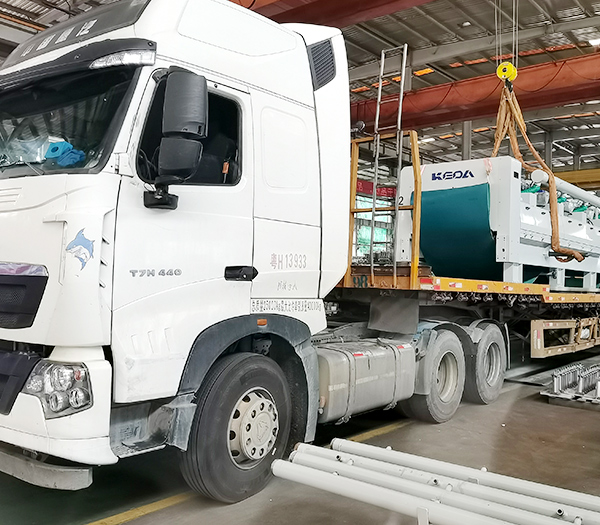
Customs documentation presents a massive hurdle for industrial components. Harmonized System (HS) codes dictate tariff rates. Standard goods have clear, undisputed codes. Project cargo often ships partially dismantled to meet road weight restrictions. A massive industrial press might cross the border in six separate shipments over three weeks.
Customs officials might classify these pieces as individual spare parts rather than a single machine. This inconsistent application triggers unexpected changes in cross-border taxes and duties. The risks are severe. Customs holds paralyze your timeline. Incorrect tariff applications lead to massive financial penalties and administrative appeals that take months to resolve.
You must deploy aggressive mitigation strategies for project cargo customs clearance. Implement pre-clearance protocols weeks before the transport begins. Utilize ATA Carnets for temporary imports like specialized lifting tools, hydraulic jacks, and custom steel saddles that must return to the origin country. Secure binding rulings from destination customs authorities prior to shipment. This locks in your tariff rate, confirms the classification of dismantled machinery, and prevents border disputes.
Ensure your documentation package includes:
Commercial invoices detailing the value of each dismantled component.
Packing lists with exact dimensions, weights, and lifting points.
Certificates of origin to claim applicable duty exemptions.
Engineering drawings proving the dismantled parts form a single machine.
Infrastructure limits dictate your transport options. A route approved in the origin country means nothing once you cross the border. You might navigate perfectly to the crossing, only to discover the destination country's connecting bridge lacks sufficient ground bearing capacity. Low wire clearances snag oversized modules. Narrow turning radii trap multi-axle trailers, requiring street furniture removal.
Severe commercial traffic congestion at border zones creates immovable obstacles. Your cargo risks becoming physically stranded. OOG dimensions cannot simply turn around in a crowded border queue or take a detour down an unverified side street.
Mitigation requires mandating comprehensive, continuous route surveys. These surveys must span all jurisdictions from origin to final foundation. Time your border approaches strategically. Avoid peak commercial congestion hours. Cross during low-traffic windows, often late at night or early Sunday morning, to ensure maneuverability and minimize public disruption.
A proper route survey process includes:
Initial desktop study using satellite imagery and historical transport data.
Physical drive-through by a heavy-haul route engineer.
Structural analysis of all bridges, culverts, and overpasses.
Swept path analysis using CAD software for critical turns.
Identification of street furniture requiring temporary removal.
International borders often force a change in transport modes. You might transfer components from a heavy-duty railcar to a specialized multi-axle trailer. You might integrate heavy-lift air charters for critical path components that fell behind manufacturing schedules. Transferring loads at border zones presents massive logistical hurdles. Specialized lifting equipment, like heavy gantry cranes or high-capacity reach stackers, is often scarce at remote border crossings.
These handoffs represent the highest risk phase in multimodal project logistics. Extended dwell times occur while waiting for cranes to mobilize from other cities. Handling risks multiply every time the cargo lifts into the air. Carrier misalignment leaves cargo sitting on the tarmac exposed to the elements.
You must evaluate port-of-entry infrastructure capabilities months in advance. Pre-stage certified lifting equipment, hydraulic gantries, and rigging crews at border transfer points. Control the handoff environment completely. Never assume the border facility has the gear required to lift a 150-ton module safely.
Bureaucracy fragments across borders. Disparate rules govern civilian pilot cars and police escorts. The origin country might mandate daylight travel only for loads over 16 feet wide. The destination country might restrict heavy loads strictly to night travel to avoid commuter traffic. Heavy-haul permitting varies wildly across national, provincial, and municipal jurisdictions. A single cross-border route might require twenty different permits from twenty different agencies.
Mismatched regulations halt transport mid-route. Expired permits force trailers to park on highway shoulders, creating safety hazards. Missing police escorts lead to impounds and fines. Frost laws in northern climates restrict heavy loads during spring thaws, forcing schedule adjustments.
Mitigation requires centralized permit management. Do not rely on individual carriers to manage their own permits in silos. Build buffer times into the transport schedule. Account for cross-border bureaucratic delays, weather holds, and mandatory driver rest periods before they happen.
Project cargo attracts attention. High-value, highly visible components remain particularly vulnerable during stationary periods. Congested border crossings force trailers to sit for days awaiting clearance. Prolonged customs holds expose custom-built machinery to theft, tampering, or vandalism. Standard canvas tarps offer zero protection against determined interference.
Damage to custom-built components proves irreparable. You cannot simply order a replacement turbine rotor from a warehouse; manufacturing a new one takes a year. Compromised project integrity delays facility launches by months.
Deploy dedicated security escorts for all stationary periods. Utilize secure bonded staging areas near the border with controlled access. Implement continuous physical surveillance, impact recorders, and GPS geofencing during all border dwell times. Treat the cargo like high-value currency.
Comparison of Logistics Partner Capabilities
Capability Dimension | Standard Freight Brokerage | Specialized Project Cargo Forwarder |
|---|---|---|
Engineering Support | Outsourced to third-party vendors. | In-house naval architects and loadmasters. |
Route Planning | Relies on standard GPS and carrier advice. | Conducts physical, multi-jurisdictional route surveys. |
Customs Expertise | Processes standard commercial invoices. | Secures binding rulings for dismantled OOG machinery. |
Border Handoffs | Leaves coordination to individual carriers. | Pre-stages certified rigging crews and cranes. |
Risk Management | Reactive problem solving after delays occur. | Proactive contingency planning and secondary routes. |
Do not confuse standard freight brokers with project logisticians. Evaluate their technical depth. Does the forwarder rely entirely on third parties for transport engineering? Or do they employ in-house naval architects, loadmasters, and heavy-haul engineers? This distinction determines your success.
In-house engineering ensures precise execution. heavy lift logistics require customized lashing, securing, and lifting plans. Engineers must calculate deck strength for multimodal transitions. They must design steel saddles that distribute weight evenly across multi-axle trailers to meet strict ground bearing pressure limits. In-house control over these calculations drastically reduces damage risk during cross-border handoffs. When a lift plan needs modification on the border dock due to high winds, an in-house engineer can recalculate and approve the change immediately.
Global reach means nothing without local execution. Assess the forwarder's direct relationships. Do they know the local customs authorities? Do they have direct lines to stevedores, crane operators, and heavy-haul carriers in both the origin and destination countries? Specific expertise in high-volume, complex corridors proves invaluable.
A true global project cargo freight forwarder maintains a strong local presence. This bypasses language barriers instantly. Local experts navigate cultural nuances during tense negotiations with border officials. If a customs agent questions documentation at 2:00 AM, local teams provide immediate troubleshooting in the native language. You cannot manage a border crisis from a corporate office five thousand miles away. You need boots on the ground.
Certifications validate operational security. Look for AEO (Authorized Economic Operator) or C-TPAT (Customs-Trade Partnership Against Terrorism) status. These certifications expedite border crossings. They prove the forwarder maintains rigorous, validated security protocols. Uncertified carriers face higher inspection rates, longer border queues, and invasive cargo examinations.
Evaluate their insurance scope rigorously. Standard cargo liability fails project logistics. Ensure their marine and project cargo insurance extends through high-risk border transshipment nodes. Coverage must bridge multiple carrier handoffs without gaps. If a crane drops a component during a border transfer, you must know exactly whose policy covers the catastrophic loss. Demand "All Risk" coverage and mandate independent marine warranty surveyors to oversee critical lifts.
Late planning guarantees failure. Engage logistics partners during the Front-End Engineering Design (FEED) phase. Do not wait until the equipment rolls off the assembly line. Design equipment that actually fits within cross-border transport limitations. Altering a flange design by two inches or adding specific lifting trunnions during manufacturing might save massive budget overruns and eliminate the need for road modifications.
Conduct feasibility studies early. Determine specific transportation modes before finalizing the manufacturing schedule. If a component exceeds the structural capacity of the only border bridge, you must know this before you build it. international project cargo demands proactive engineering, not reactive problem-solving.
Standard GPS tracking fails during multimodal handoffs. A "visibility gap" occurs when cargo switches from an origin carrier to a destination carrier at the border. The origin truck drops the load at a staging yard. The destination truck has not yet arrived. For 48 hours, your multi-million-dollar asset disappears from tracking screens.
Demand unified, real-time milestone reporting across all carriers. Deploy dedicated supercargoes (port captains). These on-site supervisors travel with the cargo and oversee every physical transfer, ensuring lashing plans are followed exactly. Utilize impact recorders and tilt sensors to provide a verifiable data trail if damage occurs during a blind handoff.
Develop pre-approved "Plan B" routes. Sudden border closures, severe weather, or infrastructure failures happen. When a primary route fails, your convoy must pivot immediately to the secondary route without waiting days for new permits.
Audit your upcoming capital project timelines to identify all out-of-gauge international shipments requiring specialized transport.
Gather technical drawings, lifting points, and center-of-gravity data for your heaviest components to share with engineering teams.
Request a preliminary route feasibility study and swept path analysis from a specialized project forwarder.
Establish a centralized permit and customs documentation review process to secure binding rulings before manufacturing concludes.
A: Project cargo involves equipment with extreme weight, out-of-gauge dimensions, or high centers of gravity. It requires specialized trailers, heavy lift cranes, and bespoke engineering plans. Unlike standard freight, it cannot fit into standard shipping containers and demands complex route surveys and multi-jurisdictional permits.
A: Customs holds paralyze transport schedules. They trigger massive demurrage charges for specialized trailers and crane standby fees at the destination site. Prolonged holds also expose high-value cargo to security risks and can cascade into multi-million-dollar delays for the overall capital project.
A: Physical infrastructure changes at borders. A route approved in the origin country may lead to a border bridge with insufficient load capacity or low wire clearances in the destination country. Continuous route surveys identify these bottlenecks early, preventing cargo from becoming stranded.
A: The visibility gap occurs when cargo transfers between different carriers or transport modes at a border. Standard tracking systems often fail to communicate during this handoff. Deploying on-site supercargoes and unified tracking platforms ensures continuous chain-of-custody monitoring.
A: High-value cargo is vulnerable during stationary periods. Mitigate risks by deploying dedicated security escorts, utilizing secure bonded staging areas, and implementing continuous physical surveillance. Timing border approaches to avoid peak congestion also reduces stationary exposure.
A: Look for AEO (Authorized Economic Operator) and C-TPAT (Customs-Trade Partnership Against Terrorism) certifications. These validate the forwarder's security protocols, expedite border processing, and reduce the likelihood of extensive customs inspections during transit.