
Views: 0 Author: Site Editor Publish Time: 2026-03-11 Origin: Site


A massive wind turbine blade arrives at a coastal port, stretching longer than a football field. A refinery module weighing hundreds of tons must travel from a manufacturing facility to a remote industrial site across several borders. Situations like these are where Project Cargo Logistics becomes essential. Unlike conventional freight transportation, project cargo logistics focuses on moving oversized, heavy, or highly complex cargo that cannot be handled through standard container shipping methods.
Understanding how project cargo logistics works helps businesses plan large equipment transportation more effectively and avoid costly delays or operational risks. From engineering studies and route planning to multimodal transport coordination, this specialized logistics field ensures that oversized cargo reaches its destination safely, efficiently, and on schedule. For companies involved in large infrastructure, manufacturing, or energy projects, project cargo logistics often becomes a critical part of the supply chain.
Not every large shipment automatically qualifies as project cargo. The term typically applies to cargo that exceeds standard transportation dimensions or requires specialized planning and handling. These shipments are often extremely long, wide, tall, or heavy, making them impossible to fit inside standard containers.
For example, large industrial machinery, wind turbine components, mining equipment, and refinery modules often fall into this category. Their dimensions alone can require custom lifting equipment, heavy-duty transport vehicles, and detailed route planning before transportation even begins.
Beyond size and weight, complexity also plays a role. Some cargo pieces must move together as part of a larger project installation, meaning the shipment must be synchronized with construction schedules or equipment assembly timelines.
A common misunderstanding is that project cargo simply refers to cargo that cannot be placed in containers. While this is often true, the real definition goes much further. Project cargo logistics also involves shipments that require specialized coordination across multiple transport stages, locations, and stakeholders.
Even cargo that technically fits inside a container may be treated as project cargo if it forms part of a larger industrial installation requiring precise scheduling, special handling equipment, or coordinated delivery.
Examples of project cargo shipments frequently include:
Wind turbine towers, blades, and nacelles
Large power generation equipment
Mining crushers and drilling rigs
Industrial manufacturing lines
Refinery or petrochemical modules
Heavy transformers and turbines
These items often move as part of major infrastructure or industrial projects, where transportation planning must align closely with engineering and construction milestones.
Standard freight shipping usually involves booking container space or arranging standard cargo transport through established routes. Project cargo logistics, however, begins long before cargo reaches a port or warehouse.
Engineering teams may analyze cargo weight distribution, lifting points, packaging requirements, and transportation limitations. Route surveys are often conducted to determine whether bridges, tunnels, roads, and port infrastructure can accommodate the cargo safely.
Project cargo rarely travels through a single transportation method. Instead, it typically involves a carefully coordinated combination of ocean freight, road transport, rail transport, and sometimes air charter services.
For example, oversized equipment might travel by specialized truck from a factory to a port, then by heavy-lift vessel across oceans, followed by inland transportation using modular trailers to reach a remote project site.
Route restrictions such as road width, bridge weight limits, or port crane capacity can all influence how the cargo moves and which transportation options are feasible.
Another key difference lies in handling requirements. Project cargo shipments often require specialized cranes, lifting frames, and securing techniques. Permits must be obtained from local authorities when cargo exceeds road transport limits.
Additionally, the final delivery stage may involve navigating construction zones or undeveloped project sites, which adds further complexity to the logistics planning process.
Energy infrastructure projects frequently depend on large equipment shipments. Wind turbines, hydroelectric components, and power transformers all require specialized transportation due to their size and weight.
Wind energy projects in particular involve transporting extremely long turbine blades and tower sections from manufacturing facilities to installation sites.
Mining operations require heavy equipment such as crushers, drilling rigs, and conveyor systems. These machines are often manufactured in different countries and transported to remote mining regions.
Transporting such equipment requires careful planning to overcome infrastructure limitations and challenging terrain conditions.
Large construction projects such as bridges, airports, and industrial complexes rely on prefabricated structural components. These parts may be extremely large and must arrive in precise sequences to match construction timelines.
Project cargo logistics ensures that these components reach construction sites exactly when they are needed.
Manufacturers occasionally relocate entire production lines or expand factory facilities. Moving large industrial machinery between countries requires coordinated logistics planning to minimize downtime and ensure equipment safety during transport.
The first step in project cargo logistics is evaluating the cargo itself. Dimensions, weight, packaging requirements, and lifting points must all be analyzed.
This evaluation helps logistics specialists determine whether special handling equipment or packaging adjustments are necessary.
After assessing the cargo, logistics teams design a transportation plan that may involve several modes of transport.
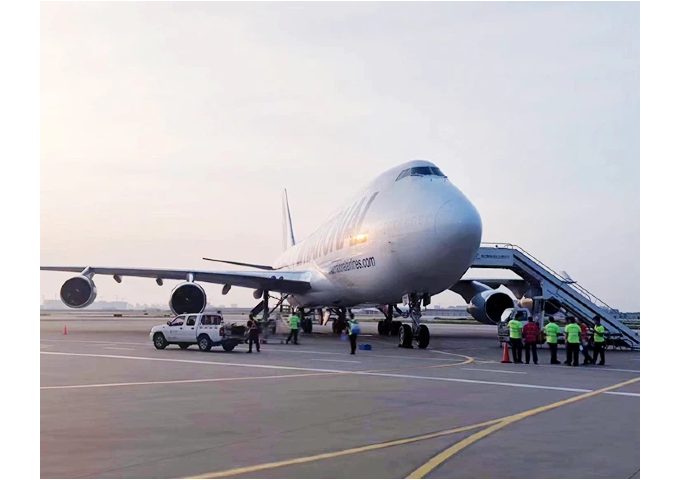
Ocean freight typically carries the main cargo load, while road transport connects factories to ports and final project sites. In urgent situations, air charter transportation may be used to move critical components quickly.
At ports, specialized cranes or heavy-lift vessels handle oversized cargo pieces. Proper lifting methods and secure stowage are essential to prevent damage during loading and unloading.
Once the cargo arrives at the destination port, inland transport vehicles deliver it to the project site, often using modular trailers designed for heavy loads.
Project cargo shipments require detailed documentation to ensure compliance with international shipping regulations. Customs clearance, route permits, and cargo insurance are all part of the process.
Milestone tracking also ensures that shipments remain aligned with project construction schedules.
Cargo Example | Why Standard Shipping May Not Work | Typical Handling Requirement | Likely Transport Combination |
Wind turbine blades | Excessive length prevents containerization | Heavy-lift cranes and blade racks | Road + Breakbulk Vessel |
Power transformers | Extremely heavy weight | Specialized lifting frames | Road + Heavy-Lift Ship |
Mining crushers | Oversized components | Reinforced transport trailers | Road + Ocean Freight |
Industrial modules | Large integrated structures | Customized lifting operations | Barge + Vessel + Truck |
Manufacturing machinery | Complex installation equipment | Protective packaging and careful securing | Sea + Inland Transport |
Oversized cargo may encounter unexpected infrastructure limitations, such as narrow roads, weak bridges, or restricted tunnels. Without proper route surveys, shipments may face significant delays.
Not all ports have the equipment necessary to handle heavy cargo. Limited crane capacity or unsuitable terminal facilities can complicate cargo operations if not considered in advance.
Improper packaging or incorrectly designed lifting points can damage cargo during loading and unloading. This risk increases significantly with heavy equipment.
Large industrial projects involve multiple suppliers and contractors. Poor logistics coordination can disrupt installation schedules and lead to costly project delays.
Sometimes project timelines require immediate shipment of critical components. Air charter transportation can move these items quickly, preventing project delays and ensuring continuous construction progress.
Certain projects involve hazardous materials or specialized equipment that must follow strict international shipping regulations. In these cases, logistics providers must manage regulatory compliance while maintaining safe transportation procedures.
When a single logistics provider can coordinate bulky cargo transportation, dangerous goods handling, and air charter solutions, project managers benefit from smoother coordination and reduced operational risk.
CNS INTERTRANS has developed extensive experience in managing these types of complex shipments. Since its establishment in Shenzhen in 2005, the company has built cooperative relationships with logistics partners in over 100 countries and operates across hundreds of international ports. This global network enables efficient coordination of large-scale engineering cargo movements.
Large industrial shipments often involve many stakeholders, including manufacturers, shipping lines, port operators, and construction teams. Centralized coordination simplifies communication and reduces the risk of misunderstandings.
Every project cargo shipment has unique characteristics. Combining different transport methods allows logistics providers to adapt to infrastructure limitations, time constraints, and cargo requirements.
Professional project cargo logistics focuses on minimizing risk throughout the entire transportation process. This includes proper packaging, route analysis, cargo monitoring, and contingency planning.
With nearly two decades of experience in transporting ultra-long, ultra-wide, ultra-high, and overweight machinery and equipment, CNS INTERTRANS has supported large engineering shipments for clients across numerous global industries.
Large infrastructure projects and heavy industrial operations depend on reliable transportation for oversized equipment and critical machinery. Heavy lift logistics ensures that these complex shipments move safely across borders, ports, and project sites while maintaining strict schedules and operational safety. With global logistics networks, specialized cargo handling expertise, and extensive experience in engineering transportation, CNS INTERTRANS provides integrated solutions that help businesses move complex cargo efficiently.
If your project involves oversized equipment or complex industrial cargo movements, contact us to learn how our global logistics expertise can support your transportation needs.
Project cargo logistics is used for transporting oversized, heavy, or complex cargo that cannot be handled through standard container shipping. It is commonly required for large industrial, energy, or infrastructure projects.
Industries such as renewable energy, mining, heavy manufacturing, construction, and oil and gas frequently require project cargo logistics because their equipment and machinery are often oversized or extremely heavy.
Normal freight shipping focuses on standardized cargo that fits inside containers. Project cargo involves specialized planning, heavy-lift handling, and coordinated transportation across multiple modes.
Proper planning helps avoid route restrictions, infrastructure limitations, and handling risks. Detailed logistics planning ensures that large cargo arrives safely and on schedule.