
Views: 0 Author: Site Editor Publish Time: 2026-03-18 Origin: Site


Moving an entire power plant turbine, shipping refinery modules across continents, or delivering oversized mining equipment to a remote site requires more than conventional freight solutions. Situations like these rely on Project Cargo Transportation, a specialized logistics discipline designed for oversized, heavy, or time-critical industrial cargo. Unlike routine shipping, project cargo transportation involves engineering-level planning, multimodal transport coordination, and careful execution to ensure that large and complex equipment arrives safely and on schedule.
For industries that depend on heavy machinery and infrastructure development, understanding how project cargo transportation works is essential. From route analysis to heavy lift transport and international coordination, this logistics approach enables companies to deliver major equipment across the world while maintaining efficiency and safety.
Project cargo transportation primarily focuses on oversized and heavy-lift equipment that cannot be shipped using standard container methods. These cargo items often exceed normal dimensions and require special handling procedures, lifting equipment, and reinforced transport structures.
Examples include turbines, power generators, industrial reactors, mining machinery, and wind turbine blades. Their weight may reach hundreds of tons, and their dimensions often exceed road or port infrastructure limitations.
Handling such cargo requires specialized logistics expertise, including heavy lift transport equipment, reinforced loading platforms, and carefully planned lifting procedures.
Many project cargo shipments involve extremely valuable equipment. Industrial machinery used in power generation, manufacturing plants, or energy infrastructure may represent millions of dollars in investment.
Because these components are critical to large engineering projects, delays can disrupt construction timelines and significantly increase project costs. As a result, project cargo transportation must ensure precise scheduling and reliable transport coordination.
Project cargo often involves multiple equipment units moving from different manufacturers to the same project site. Each shipment must arrive in sequence so that installation and assembly can proceed smoothly.
For example, a power plant project may require turbines, transformers, generators, and structural components delivered from multiple suppliers worldwide. Coordinating these shipments forms an essential part of global project cargo logistics.
Every project cargo movement begins with detailed cargo analysis. Logistics planners gather information such as dimensions, weight, center of gravity, lifting points, and packaging requirements.
This information determines the type of lifting equipment, transport vehicle, and cargo securing method required during transportation.
Accurate technical data ensures safe handling during loading, shipping, and final delivery.
Oversized cargo cannot travel through every transport route. Bridges, tunnels, highways, and port infrastructure may impose restrictions on cargo size or weight.
Logistics planners conduct route surveys to evaluate whether cargo can pass safely through each segment of the journey. This assessment includes analyzing road widths, bridge load capacity, turning radius limitations, and local transport regulations.
When necessary, alternate routes or specialized transport equipment may be arranged.
Not all ports are equipped to handle heavy lift cargo. Some terminals lack cranes with sufficient lifting capacity, while others may not have suitable storage space for oversized components.
Project cargo transportation planning includes evaluating port facilities to ensure they can accommodate cargo loading and unloading operations safely.
Large equipment must be protected from vibration, moisture, and movement during long-distance transportation. Specialized packaging solutions, reinforced frames, and heavy-duty lashing systems are often required.
Proper cargo securing prevents damage during sea transport and protects sensitive machinery throughout the entire logistics process.
Project cargo shipments rarely rely on a single transport method. Instead, multimodal logistics solutions combine different transportation modes to achieve safe and efficient delivery.
Ocean freight remains the backbone of global project cargo transportation. Heavy-lift vessels and breakbulk ships are capable of transporting extremely large equipment across international trade routes.
These vessels are equipped with high-capacity cranes and reinforced cargo decks designed specifically for oversized cargo.
Ocean transport allows large equipment to move between continents while maintaining cost efficiency for heavy cargo loads.
Road transportation connects manufacturing facilities to ports and delivers cargo from ports to final project sites. Specialized modular trailers and heavy-duty transport vehicles are used to move extremely heavy equipment.
Transport planning must consider road conditions, bridge weight limits, and traffic regulations when moving oversized cargo across land routes.
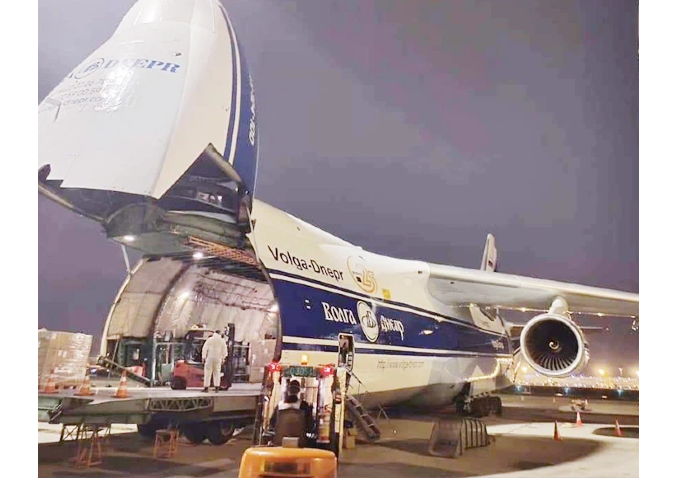
Certain project components cannot wait for scheduled sea transport due to urgent construction deadlines. In such cases, air charter logistics may be used to deliver critical equipment quickly.
Air charter transportation is particularly valuable for time-sensitive components that must arrive quickly to prevent project delays.
Some industrial equipment travels through inland waterways using barges, especially when road infrastructure cannot support extremely heavy loads. Rail transportation may also be used when routes allow.
Combining barge, rail, and road transport provides flexibility when delivering cargo to remote project locations.
The oil and gas sector frequently requires the transportation of large refinery modules, drilling equipment, and offshore platform components. These shipments are often extremely heavy and require specialized handling.
Because energy projects operate under strict timelines, logistics planning must ensure precise delivery coordination.
Wind energy projects rely heavily on project cargo transportation due to the size of turbine components. Wind turbine blades can exceed 70 meters in length, while tower sections and nacelles weigh several hundred tons.
Transporting these components requires heavy lift vessels, specialized trailers, and carefully planned logistics routes.
Manufacturing companies often relocate or expand production facilities, requiring the transport of entire machinery systems between countries.
Project cargo logistics allows complex manufacturing equipment to be shipped safely while minimizing downtime during installation.
Engineering, procurement, and construction projects often involve transporting massive structural components to construction sites.
Bridges, airports, industrial plants, and power stations all require oversized components that must be delivered through carefully coordinated logistics operations.
Large industrial shipments frequently cross international borders, requiring detailed customs documentation and regulatory compliance.
Incomplete documentation or regulatory misunderstandings can lead to delays, inspections, and additional costs.
Shipping schedules may be affected by port congestion or vessel availability. Because project cargo often requires specific vessel types, limited sailing schedules can create logistical challenges.
Proper planning ensures cargo is booked on suitable vessels within project timelines.
Oversized cargo movements often require special permits from transportation authorities. These permits regulate cargo dimensions, transport routes, and escort vehicle requirements.
Obtaining permits in time is essential to avoid transport delays.
Large cargo shipments may travel through multiple transshipment points or face challenging weather conditions during ocean transport.
Proper cargo securing, monitoring, and route planning help maintain cargo integrity throughout the journey.
Within large industrial projects, some equipment pieces are critical to installation timelines while others can arrive later without affecting project progress.
Identifying critical cargo allows logistics planners to prioritize transport arrangements and reduce project risks.
Many industrial projects involve multiple suppliers shipping equipment from different countries. Shipments may be staggered to ensure that installation sequences remain organized.
Careful coordination ensures cargo arrives in the correct order.
Effective communication between suppliers, logistics providers, and project managers is essential for managing project cargo transportation.
Clear communication helps track shipments, resolve issues quickly, and maintain alignment with project schedules.
Industry | Common Cargo | Main Transport Challenge | Typical Logistics Solution |
Renewable Energy | Wind turbine blades, tower sections | Extreme length and height | Heavy-lift vessel + modular trailer |
Oil and Gas | Refinery modules, drilling equipment | High weight and complex installation | Breakbulk vessel + heavy lift crane |
Mining | Crushers, excavators | Remote project locations | Ocean freight + inland heavy transport |
Manufacturing | Production machinery | Sensitive equipment handling | Sea freight + protective packaging |
Infrastructure | Bridge structures, steel modules | Oversized structural components | Barge + road transport |
Handling oversized cargo requires specialized expertise. Logistics providers must understand cargo engineering, heavy lift operations, and multimodal transport coordination.
Years of experience transporting complex industrial equipment allow logistics teams to anticipate challenges and develop practical solutions.
Different cargo types require different transportation solutions. Access to heavy-lift vessels, breakbulk shipping lines, air charter services, and specialized transport equipment allows logistics providers to handle diverse project cargo requirements.
Some industrial shipments involve hazardous materials or urgent project components. Coordinating these shipments requires knowledge of international shipping regulations and flexible logistics planning.
CNS INTERTRANS, headquartered in Shenzhen and founded in 2005, has developed strong global partnerships with logistics companies across more than 100 countries. With agents in over 300 ports worldwide, the company supports large-scale engineering cargo transportation through extensive global logistics networks.
Through years of experience transporting ultra-long, ultra-wide, ultra-high, and overweight machinery and equipment, CNS INTERTRANS has gained practical knowledge in managing complex global project cargo operations.
Large industrial projects depend on efficient logistics to move massive equipment across continents and deliver it safely to construction sites. Heavy lift transportation ensures that oversized and complex cargo reaches its destination through careful planning, specialized equipment, and coordinated global logistics networks. With extensive experience in transporting large engineering equipment and strong international partnerships across hundreds of ports, CNS INTERTRANS provides reliable logistics solutions for global industries.
If your project involves oversized equipment or complex engineering cargo movements, contact us to learn how our global logistics services can support your transportation needs.
Project cargo transportation is used to move oversized or heavy equipment that cannot be shipped using standard container methods. It is commonly required for energy, infrastructure, mining, and manufacturing projects.
Heavy lift transport allows extremely large machinery and equipment to be moved safely using specialized vessels, cranes, and trailers designed for oversized cargo.
Project cargo transportation typically combines ocean freight, road transport, rail, barges, and sometimes air charter services to move cargo efficiently from origin to destination.
Global project cargo transportation involves multiple transport modes, international regulations, route restrictions, and precise scheduling to match construction and installation timelines.