
Views: 0 Author: Site Editor Publish Time: 2026-04-21 Origin: Site


Shipping large and heavy items can be a complex process that involves careful planning, specialized equipment, and an understanding of the right logistics solutions. Whether it’s a shipment of construction machinery, a vehicle, or industrial equipment, managing oversized freight requires a different approach compared to regular shipments.
In this article, we’ll explore the different methods used to ship large and heavy items, the factors that affect the cost and logistics, the best practices for ensuring safe transport, and how you can streamline your shipping process. If you're looking for specialized assistance with your oversized shipments, CNS INTERTRANS offers expert solutions tailored to your needs.
When shipping large and heavy items, the logistics process becomes more intricate due to the physical size and weight of the cargo. Unlike smaller packages that can be easily placed in standard containers or trucks, large items require customized solutions for loading, unloading, and transportation. Oversized cargo often needs special permits, equipment, and planning to ensure a smooth delivery.
Shipping large items involves considerations such as:
Non-standard dimensions: Goods that are too large for regular shipping containers or vehicles.
Heavy weight: Cargo that exceeds weight limits for conventional transportation.
Special handling needs: Items that may be fragile, hazardous, or sensitive to temperature and environmental conditions.
These unique requirements make shipping large items a much more involved process, often requiring a specialized logistics provider to handle everything from planning and permits to transport and delivery.
Shipping large and heavy items involves various factors that can influence the cost of transportation. Understanding these factors will help you better estimate your expenses and plan accordingly.
The most obvious factor affecting shipping costs is the size and weight of the item. Larger and heavier items typically require more expensive transport methods due to the special equipment and handling required. Shipping companies often base their pricing on either the actual weight of the shipment or its dimensional weight (volumetric weight).
Actual Weight: This is the true weight of the item, measured in kilograms or pounds. Heavier items will naturally cost more to ship.
Volumetric Weight: If an item is large but lightweight, it will still occupy significant space on the transport vehicle or container. Volumetric weight calculations take the dimensions of the cargo into account and are often used when shipping large, lightweight items. The formula for calculating volumetric weight is:
Volumetric Weight (kg) = (Length x Width x Height) / Dimensional Factor
Airlines and shipping companies use this method to ensure that large but light shipments don't take up excessive space without paying for it.
The choice of shipping method has a significant impact on the cost and time required to deliver large items. The most common methods include:
Road Freight: For domestic shipments, road transport is the most flexible and cost-effective option for heavy or oversized items. Trucks, flatbeds, and low-bed trailers are often used for transporting large goods. However, road freight may face restrictions due to road conditions, weight limits, and bridges or tunnels with clearance issues.
Sea Freight: When shipping internationally, sea freight is often the most economical option. Large items can be shipped on flat-rack containers, roll-on/roll-off ships, or heavy-lift vessels. However, sea freight usually takes longer than air freight, and delivery times can vary depending on the route and ports involved.
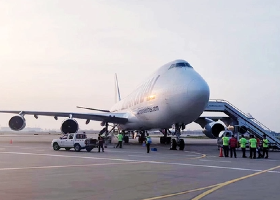
Air Freight: Air freight is faster than other shipping methods but is often more expensive. It is typically used for high-value items that need to reach their destination quickly. Air freight has strict size and weight restrictions, so only items within specific limits can be shipped this way.
Rail Freight: Rail freight is often used for bulky items over long distances, particularly in countries with well-developed rail infrastructure. It is more cost-effective than air freight and offers substantial capacity for large shipments. However, it may require coordination with other transport modes for final delivery.
Shipping costs also increase with the distance the cargo needs to travel. International shipments, in particular, are subject to higher costs due to the logistics involved in crossing borders, as well as the need for customs clearance and potentially longer transit times.
When shipping large items, consider the infrastructure of the destination. Remote or hard-to-reach locations often involve additional handling, special equipment, or longer transit times, which can increase the cost.
Certain large items may have additional handling requirements that impact the shipping cost. This could include:
Fragility: Some large items, such as glass or delicate machinery, may need special packaging and careful handling to prevent damage during transit.
Temperature Sensitivity: Items that are sensitive to temperature or environmental conditions, such as pharmaceuticals or perishable goods, will require climate-controlled transport, which is more expensive.
Hazardous Materials: Shipping hazardous materials involves complying with strict regulations, special packaging, and handling procedures, which increases costs.
For high-value or critical shipments, you may want to purchase insurance to protect against damage, theft, or loss during transit. This adds an extra cost to the shipment. Additionally, international shipments are subject to customs duties, taxes, and regulations, which may further impact the total cost of shipping.
Now that we’ve covered the essential factors affecting large item shipping, let's break down the process into easy-to-follow steps.
Before you can start planning the shipping process, accurately assess the size and weight of your items. This includes measuring the length, width, height, and weight. Be sure to account for any additional equipment or packaging that will be used.
Choose the transport method that best suits your cargo. If speed is important, air freight may be the best option. For international or bulky items, sea freight may be the most cost-effective. If you’re transporting domestically or regionally, road or rail transport may be ideal.
Depending on the size, weight, and type of cargo, you may need special permits for road transport or customs documentation for international shipments. Work with your logistics provider to ensure that all the required permits are secured.
Ensure your large items are securely packed to prevent damage during transport. For oversized or delicate items, consider custom crating or cushioning to protect them during handling.
Once the details are in place, coordinate with your logistics provider to schedule the pickup and delivery. If you’re using a specialized transport provider like CNS INTERTRANS, their team will assist with route planning, coordination with customs authorities, and ensure that all necessary procedures are followed.
Here’s a table to illustrate how the cost of shipping large and heavy items might break down based on various shipping methods and charges:
Cargo Type | Weight (kg) | Dimensions (m) | Transport Method | Base Rate ($) | Additional Charges ($) | Total Cost ($) |
Heavy Machinery | 20,000 | 6 x 3 x 4 | Road Freight | 4,000 | 500 (permits) | 4,500 |
Construction Material | 30,000 | 10 x 5 x 3 | Sea Freight | 15,000 | 2,000 (loading) | 17,000 |
Vehicle (Car) | 1,200 | 4 x 2 x 1.5 | Sea Freight | 2,500 | 300 (insurance) | 2,800 |
Industrial Equipment | 5,000 | 2 x 2 x 2 | Air Freight | 10,000 | 1,000 (customs) | 11,000 |
Large Furniture | 800 | 3 x 2 x 2 | Road Freight | 600 | 100 (packaging) | 700 |
Shipping large and heavy items is a complicated but essential aspect of many industries. From selecting the right transport method to managing the logistics and ensuring the cargo is safely delivered, careful planning is required. By working with a trusted logistics provider like CNS INTERTRANS, you can ensure that your oversized shipments are handled efficiently and safely, with full support every step of the way.
Whether you need to ship industrial equipment, vehicles, or large machinery, our team at CNS INTERTRANS is ready to provide a customized solution tailored to your specific needs. With our expertise and global network, we offer end-to-end logistics support for large and heavy items, ensuring that they arrive on time and within budget.
Q: How do I calculate the shipping cost for large items?
A: Shipping costs for large items are typically calculated based on the size, weight, transport method, and additional charges for permits, packaging, and customs clearance.
Q: Can I ship large items internationally?
A: Yes, large items can be shipped internationally by sea, air, or road freight, depending on the destination and urgency. Special arrangements may be required for oversized shipments.
Q: Do I need permits to ship oversized cargo?
A: Yes, oversized cargo often requires special permits for road transport or certain shipping methods. These permits must be obtained before shipping to avoid delays.
Q: How can I protect my large items during shipping?
A: Proper packaging, including custom crating or cushioning, is essential to protect large items during transport. Work with your logistics provider to ensure appropriate packaging and handling.